One of the biggest myths about emergency preparedness is that it's expensive. Scroll through any prepping forum and you'll see people talking about £500 water filters, £1,000 solar generators, and military-grade survival kits. It's easy to conclude that being prepared is a luxury.
It isn't. A solid 72-hour emergency kit — enough to keep a household of two adults safe, warm, fed, and informed through a major power cut or severe weather event — can be built for well under £100. Most of it comes from Tesco, Aldi, Poundland, and Screwfix.
This guide walks you through exactly what to buy, where to get it, and in what order. Every item earns its place. Nothing is filler.
The golden rule: prioritise ruthlessly
When money is tight, you need to spend it in the right order. The priority list for any emergency is:
- Water — you'll die in 3 days without it
- Warmth — hypothermia can kill in hours in a UK winter
- Light — you need to see what you're doing
- Food — you can last weeks without it, but morale collapses fast
- Communication — information and the ability to call for help
- First aid — minor injuries become serious without treatment
Spend your budget in that order. If you can only afford the first three, you're still in a far better position than most people.
The full kit: item by item
Water — £5
Your body needs a minimum of 2 litres of drinking water per day. With cooking and basic hygiene, plan for 3 litres per person per day. For two people over 72 hours, that's 18 litres.
What to buy:
- 12 × 1.5L bottles of supermarket still water — about £4–5 from Tesco, Aldi, or Lidl
That gives you 18 litres. Store them in a cool, dark cupboard. Rotate annually — put a reminder in your phone.
Free alternative: Clean and fill 2-litre soft drink bottles with tap water. Add 2 drops of unscented household bleach per litre (the kind without fragrance or additives — Domestos Original works). Label them with the date. Replace every 6 months.
Running total: ~£5
Warmth — £10–15
Most UK homes lose 1–2°C per hour without heating. In a winter power cut, your house could be below 10°C within half a day. That's uncomfortable for healthy adults and dangerous for children, elderly people, and anyone with certain medical conditions.
What to buy:
- 2 × thermal base layer tops — £4 each from Primark (men's or women's)
- 1 × pack of disposable hand warmers (10 pack) — £3–4 from Amazon or Home Bargains
- 2 × emergency foil blankets — £1–2 from Poundland or Amazon (these are the silvery "space blankets" — surprisingly effective at retaining body heat)
Things you probably already have:
- Sleeping bags, duvets, thick socks, woolly hats — dig them out and know where they are
- Hot water bottles — fill them from water heated on a camping stove
Tips:
- Layer up rather than relying on one thick garment — layers trap air and insulate better
- Stay in one room with the door closed — your body heat warms a small space faster
- The smallest upstairs room is usually the warmest (heat rises, less wall area to lose heat through)
Running total: ~£17
Light — £12–18
When the power goes out and it gets dark, a reliable light source transforms the situation. Fumbling around in the dark is stressful, dangerous, and makes every other task harder.
What to buy:
- 1 × LED head torch (200+ lumens) — £8–10 from Screwfix, Decathlon, or Amazon. The Energizer or Varta models are solid budget picks.
- 1 × pack of spare AA batteries (8 pack) — £3 from Aldi, Poundland, or Lidl
- 1 × box of household candles + matches or lighter — £2 from Tesco or Poundland
Why a head torch? Hands-free lighting is transformative. You can cook, read, fix things, and look after children without holding a torch in your teeth. Once you've used one in a power cut, you'll wonder how you managed without it.
Candle safety: Use a stable holder on a heat-proof surface. Never leave candles unattended or near curtains, paper, or anything flammable. Keep them well away from children and pets.
Running total: ~£32
Food — £15–20
You need roughly 2,000 calories per person per day. Over 72 hours for two people, that's about 12,000 calories total. Tinned and dry food from any supermarket covers this easily.
What to buy:
- 4 × tins of baked beans (400g) — £2
- 4 × tins of soup (chunky or meal-style) — £3–4
- 2 × tins of tuna — £2
- 2 × tins of chopped tomatoes — £1
- 1 × bag of pasta or rice (500g) — £1
- 1 × jar of peanut butter — £2 (calorie-dense, high protein, long shelf life)
- 1 × pack of crackers or oatcakes — £1
- 1 × box of cereal bars (6 pack) — £1.50
- 2 × packs of instant noodles or couscous — £1
- 1 × bar of chocolate — £1
That's roughly 14,000 calories for about £15–17. Adjust quantities for your household size and dietary needs.
Important: Check everyone in your household can eat what you've bought. Allergies, intolerances, vegetarian/vegan requirements — your emergency food needs to accommodate them, not ignore them.
Don't forget a tin opener. It sounds obvious, but more than one person has been caught out by a cupboard full of tins and no way to open them. If your current tin opener is ancient and unreliable, buy a new one for £2.
Cooking note: You can eat most of this cold if necessary — beans, soup, and tuna are all edible straight from the tin. But hot food is a massive morale boost. If you don't have a camping stove yet, that's a future purchase (about £20 for a basic one from Argos or Go Outdoors).
Running total: ~£50
Communication — £20–25
In an emergency, you need two things: the ability to contact people and the ability to receive information. Your phone handles both — but only while it has battery.
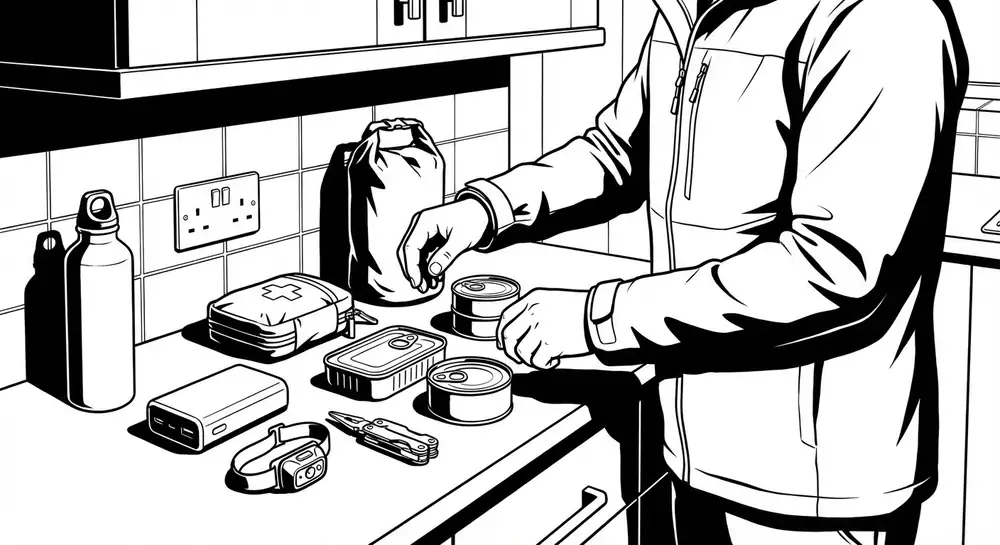
What to buy:
- 1 × USB power bank (10,000 mAh minimum, ideally 20,000 mAh) — £12–20 from Amazon, Argos, or Currys. Brands like INIU, Charmast, or Anker are reliable. A 10,000 mAh bank gives you 2–3 full phone charges.
- 1 × spare USB charging cable for your phone — £3–5 from Poundland, Tesco, or Amazon. Keep this with the power bank permanently. Do not borrow it for everyday use.
- 1 × battery-powered FM radio — £5–10 from Argos, Amazon, or charity shops. Doesn't need to be fancy. BBC Radio 4 and your local BBC station are the official emergency broadcast channels.
Why a radio? If mobile networks go down — which is likely in a widespread outage, since most cell towers have only 1–4 hours of battery backup — your phone becomes an expensive brick for communication. A simple FM radio still works because FM transmitters have generator backup and much larger coverage areas.
Power bank tip: Charge it to 100% today and check it monthly. A flat power bank in an emergency is just dead weight.
Running total: ~£73
First aid — £8–12
You don't need a trauma surgery kit. You need to handle the most common minor injuries that happen during disruptions: cuts from broken glass, burns from candles or cooking on camping stoves, trips and falls in the dark.
What to buy:
- 1 × pre-made basic first aid kit — £8–10 from Boots, Tesco, or Amazon. Should include plasters, sterile gauze, bandages, antiseptic wipes, and micropore tape.
- Paracetamol and ibuprofen — £1–2 (you probably already have these, but check the expiry dates)
Add from your medicine cabinet:
- Any prescription medication — keep at least a 3-day rolling supply at all times
- Antihistamines (for allergic reactions)
- Rehydration sachets (Dioralyte or supermarket own-brand — useful for illness or dehydration)
Running total: ~£83
Cash and documents — £0 (plus the cash itself)
Electronic payments don't work without power. ATMs don't work without power. You need physical cash.
What to do:
- Withdraw £30–50 in small notes (£5s and £10s) and coins. Store it in your emergency kit.
- Photocopy or photograph key documents: driving licence, passport, home insurance details, GP contact number. Put the copies in a zip-lock bag in the kit.
- Write down your most important phone numbers on a card. If your phone dies completely, you need to know who to call from someone else's phone.
Running total: ~£83 (plus £30–50 cash reserve)
The complete shopping list
| Item | Where to buy | Cost |
|---|---|---|
| 12 × 1.5L water | Tesco/Aldi/Lidl | £5 |
| 2 × thermal base layers | Primark | £8 |
| 10 × disposable hand warmers | Home Bargains/Amazon | £4 |
| 2 × foil emergency blankets | Poundland | £2 |
| 1 × LED head torch | Screwfix/Decathlon | £10 |
| 8 × AA batteries | Aldi/Poundland | £3 |
| Candles + matches | Tesco/Poundland | £2 |
| Tinned/dry food (assorted) | Any supermarket | £17 |
| 1 × USB power bank (10,000+ mAh) | Amazon/Argos | £15 |
| 1 × spare USB cable | Poundland | £3 |
| 1 × FM radio (battery) | Argos/Amazon | £8 |
| 1 × basic first aid kit | Boots/Tesco | £8 |
| Paracetamol + ibuprofen | Any pharmacy | £2 |
| Total | ~£87 |
That leaves a few pounds of headroom under £100, which you can put towards a tin opener, extra batteries, or a bag to put it all in.
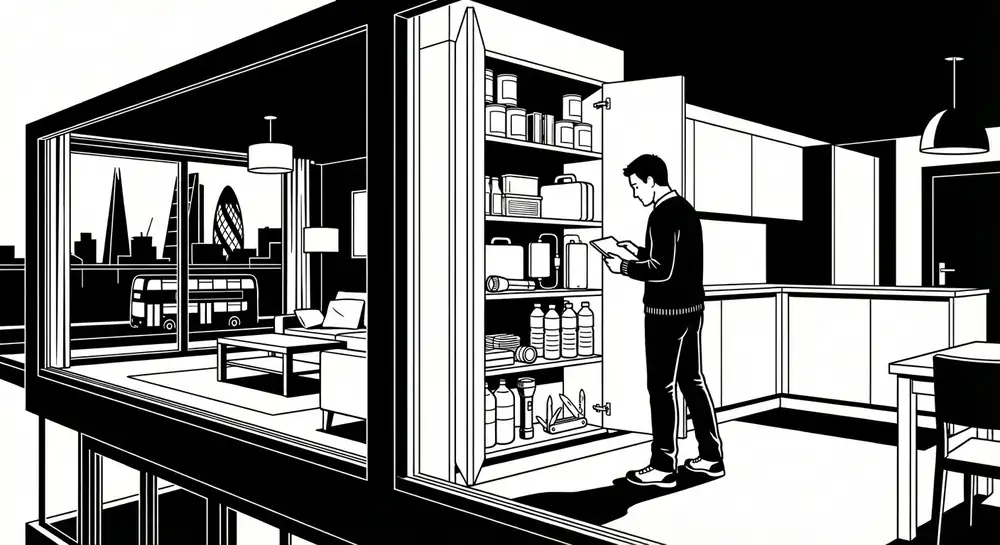
Where to store it
Your kit needs to be:
- Accessible — not buried in the loft behind Christmas decorations
- Together — everything in one place, ideally in a rucksack or large bag
- Known — everyone in the household should know where it is
A hallway cupboard, under-stairs storage, or the bottom of a bedroom wardrobe all work well. Avoid garages in winter (too cold for water and batteries) and sheds (damp damages everything).
Building it gradually
You don't have to buy everything at once. Spread it over four weekly shops:
- Week 1: Water + food (£22) — the most critical items
- Week 2: Torch + batteries + candles (£15) — you need light
- Week 3: Power bank + cable + radio (£26) — communication sorted
- Week 4: Warmth items + first aid (£22) — comfort and safety
In a month, you're done. Total cost spread over four weeks is about £20 per week — less than most people spend on takeaway coffee.
What NOT to buy (yet)
Resist the temptation to buy advanced gear before the basics are solid. These are all useful items, but they're not £100-budget priorities:
- Generators or portable power stations — start with a power bank
- Water filters — stored water covers 72 hours; filters are for extended scenarios
- Freeze-dried meals — five times the price of tinned food for the same calories
- Tactical gear — you don't need a combat knife to open a tin of beans
- Bug-out bags — sort your home kit first; you're far more likely to shelter in place
The mindset
Being prepared on a budget isn't about buying the cheapest version of expensive kit. It's about understanding what actually matters in the first 72 hours and spending your money there.
Water, warmth, light, food, communication, first aid. In that order. Everything else is a bonus.
Start this weekend. One trip to the supermarket and one to Screwfix or Argos. Under £100. You'll sleep better knowing it's done.