Two weeks of food for four people sounds like a huge undertaking. It isn't. Everything on this list is available from Tesco, Sainsbury's, Aldi, or Lidl. None of it needs refrigeration. Most of it costs less per meal than a trip to McDonald's.
This guide gives you a complete pantry plan: what to buy, how much it costs, how to store it, and how to turn it into actual meals when the power's out.
The numbers
Four people need roughly 8,000 calories per day combined (2,000 each — adjust upward for active adults, downward for young children). Over 14 days, that's 112,000 calories total.
That sounds like a lot, but calorie-dense foods are cheap and compact. A single kilogram of pasta contains about 3,500 calories. A jar of peanut butter has roughly 2,500 calories. You don't need a warehouse — you need a couple of shelves.
The complete shopping list
Staples (carbohydrates — the foundation)
| Item | Quantity | Calories | Cost | Shelf life |
|---|---|---|---|---|
| Pasta (various shapes) | 4 × 500g | 14,000 | £3–4 | 2+ years |
| Rice (long grain) | 2 × 1kg | 7,200 | £3–4 | 2+ years |
| Couscous | 2 × 500g | 7,000 | £2–3 | 2+ years |
| Instant noodles | 10 packs | 4,000 | £4–5 | 1+ year |
| Oats (porridge) | 1 × 1kg | 3,600 | £1–2 | 1+ year |
| Crackers/oatcakes | 4 packs | 4,000 | £4–5 | 6–12 months |
| Flour (plain or self-raising) | 1 × 1.5kg | 5,000 | £1 | 6–12 months |
| Subtotal | ~44,800 | ~£18–24 |
Protein
| Item | Quantity | Calories | Cost | Shelf life |
|---|---|---|---|---|
| Tinned tuna | 6 × 145g | 4,200 | £6–8 | 3+ years |
| Tinned corned beef | 2 × 340g | 4,000 | £5–6 | 3+ years |
| Tinned chicken | 2 × 200g | 1,600 | £4–5 | 2+ years |
| Baked beans | 8 × 400g | 5,600 | £4–6 | 2+ years |
| Tinned lentils/chickpeas | 6 × 400g | 4,800 | £3–5 | 3+ years |
| Peanut butter | 2 × 340g | 5,000 | £3–4 | 1+ year |
| UHT milk | 4 × 1L | 2,400 | £4–5 | 6–9 months |
| Dried milk powder | 1 × 400g | 2,000 | £3 | 1+ year |
| Subtotal | ~29,600 | ~£32–42 |
Tinned meals and sauces
| Item | Quantity | Calories | Cost | Shelf life |
|---|---|---|---|---|
| Tinned soup (chunky/meal-size) | 8 × 400g | 4,800 | £6–8 | 2+ years |
| Tinned chopped tomatoes | 6 × 400g | 1,200 | £3–4 | 2+ years |
| Tinned curry/chilli | 4 × 400g | 3,200 | £4–6 | 2+ years |
| Pasta sauce (jars) | 3 × 500g | 1,800 | £3–5 | 1+ year |
| Tinned vegetables (sweetcorn, peas, carrots) | 6 × 300g | 1,800 | £3–4 | 2+ years |
| Tinned fruit (peaches, pears) | 4 × 400g | 1,600 | £3–4 | 2+ years |
| Subtotal | ~14,400 | ~£22–31 |
Snacks and morale food
| Item | Quantity | Calories | Cost | Shelf life |
|---|---|---|---|---|
| Cereal bars/flapjacks | 3 × 6-packs | 5,400 | £4–6 | 6–12 months |
| Chocolate | 4 × 100g bars | 2,200 | £4–5 | 6–12 months |
| Biscuits (digestives, Rich Tea) | 3 packs | 4,200 | £3–4 | 6–12 months |
| Dried fruit and nuts (trail mix) | 2 × 300g | 3,600 | £5–7 | 6–12 months |
| Boiled sweets or hard candy | 1 bag | 1,000 | £1–2 | 1+ year |
| Tea bags | 80 bags | 0 | £2–3 | 1+ year |
| Coffee (instant) | 1 jar | 0 | £3–4 | 1+ year |
| Sugar | 1 × 500g | 2,000 | £1 | Indefinite |
| Subtotal | ~18,400 | ~£23–35 |
Cooking essentials
| Item | Quantity | Cost |
|---|---|---|
| Cooking oil | 1 × 500ml | £2 |
| Salt | 1 × 750g | £1 |
| Pepper | 1 grinder | £1–2 |
| Stock cubes (chicken + veg) | 2 × 10-packs | £2 |
| Soy sauce | 1 bottle | £1–2 |
| Dried herbs (mixed herbs, paprika) | 2 jars | £2 |
| Tin opener (manual) | 1 | £2–3 |
| Subtotal | ~£11–14 |
Grand total
| Category | Calories | Cost |
|---|---|---|
| Staples | 44,800 | £18–24 |
| Protein | 29,600 | £32–42 |
| Tinned meals and sauces | 14,400 | £22–31 |
| Snacks and morale food | 18,400 | £23–35 |
| Cooking essentials | — | £11–14 |
| Total | ~107,200 | ~£106–146 |
That's about 107,000 calories — enough for 13+ days at 8,000 calories/day. With careful portioning and the addition of anything already in your cupboards, it comfortably covers 14 days.
Cost per person per day: about £2–2.60. Cheaper than a meal deal.
Sample meal plans
You don't need 14 different dinners. Rotating through 5–6 meals keeps things simple and reduces waste.
Breakfast options
- Porridge with UHT milk and sugar
- Crackers with peanut butter
- Cereal bars
- Biscuits with tea (not gourmet, but it works)
Lunch options
- Tinned soup with crackers
- Tuna and sweetcorn on crackers or with couscous
- Baked beans (hot or cold)
- Corned beef sandwiches (if you have bread — bake flatbread with flour, water, salt, and oil)
Dinner options
- Pasta with tinned tomatoes and lentils
- Rice with tinned curry
- Couscous with tinned vegetables and chickpeas
- Instant noodles with tinned chicken and soy sauce
- Pasta with pesto or pasta sauce and tinned tuna
- Lentil and vegetable soup (homemade from tinned ingredients + stock cube)
Snacks
- Trail mix
- Cereal bars
- Biscuits
- Chocolate (ration it — morale lasts longer that way)
- Tea and coffee (never underestimate the psychological value of a hot drink)
Cooking without electricity
Most of these meals need hot water or gentle heating. Options:
Camping stove (recommended)
A basic single-burner camping stove costs £15–25 from Argos, Go Outdoors, or Decathlon. Butane gas canisters (CP250 size, the standard screw-on type) cost about £3–5 each and last roughly 2–3 hours of cooking.
For two weeks of cooking (two hot meals a day, 20 minutes each), you'll need about 5–6 gas canisters. Stock them alongside your food.
Kelly Kettle
A Kelly Kettle boils water using small sticks, twigs, and natural fuel. Brilliant for making tea and boiling water for couscous, instant noodles, and porridge. About £40–60 and uses free fuel.
Gas hob (if you have one)
Many UK homes have gas hobs that work without electricity — the burners light manually with a match or lighter even when the electric ignition doesn't work. Check yours before you need it.
Safety note: Never use a camping stove, barbecue, or charcoal indoors without proper ventilation. Carbon monoxide is a real risk.
Storage
Space required
The entire list above fits in a space roughly 60cm wide × 40cm deep × 80cm tall — about the size of a small bookshelf or two shelves in a kitchen cupboard.
Where to store it
- Kitchen cupboards (highest and lowest shelves are often empty)
- Under-stairs cupboard
- Bottom of a wardrobe
- Under a bed (in plastic storage boxes)
Conditions
- Cool and dry — avoid garages in summer (too hot) and damp outbuildings
- Off the floor — put a plastic sheet or tray underneath in case of leaks
- Dark — direct sunlight degrades packaging and reduces shelf life
- Accessible — not behind boxes in the loft. You need to reach it in the dark
Rotation
The biggest risk with an emergency pantry is forgetting about it until the food expires. Use the FIFO method (First In, First Out):
- Put new items at the back, oldest at the front
- Use items from your emergency stock in normal cooking, then replace them
- Check dates every 6 months — set a reminder for January and July
- If something is approaching its best-before date, eat it and replace it
Most tinned food is safe well beyond its best-before date (which is about quality, not safety). But don't let your emergency supplies become a shelf of expired tins.
Dietary considerations
Vegetarian/vegan
Replace tinned meat with:
- Extra tinned lentils, chickpeas, and kidney beans
- Tinned vegetable curry and chilli
- Nut butters (almond, cashew)
- Plant-based UHT milk (oat or soya — similar shelf life to dairy UHT)
Gluten-free
Replace pasta and crackers with:
- Extra rice
- Rice cakes or corn cakes
- Gluten-free pasta (available in most supermarkets)
- Polenta (instant polenta cooks in 5 minutes)
Young children
- Include familiar foods they'll actually eat — this is not the time for culinary adventures
- Add some pouches or jars if you have a baby or toddler
- Powdered formula if needed (check shelf life carefully)
- Small treats for morale — a biscuit goes a long way with a frightened child
Allergies
Read every label. In an emergency, you can't pop to the shop for an alternative, and you won't have access to a hospital if someone has a severe reaction. Build your pantry around what your household can safely eat.
Beyond two weeks
A two-week pantry is a solid foundation, but if you want to extend further:
- Buy in bulk — 10kg sacks of rice and pasta from wholesale or Asian supermarkets (considerably cheaper per kg)
- Add freeze-dried meals — lighter than tinned food, 5–25 year shelf life, but expensive (£5–8 per meal)
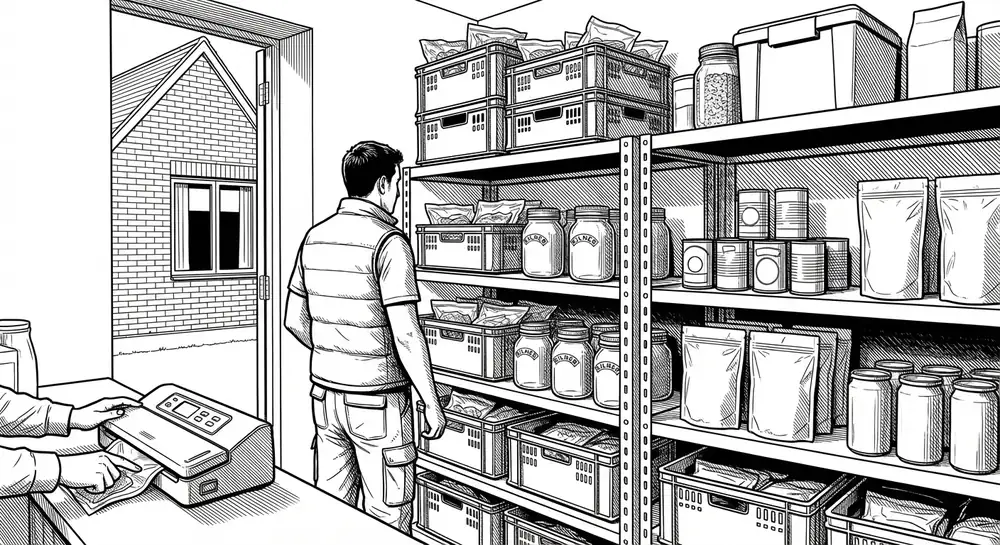
- Consider a vacuum sealer — extends the shelf life of dry goods by removing oxygen
- Grow fresh supplements — sprouting seeds (mung beans, alfalfa) on a windowsill gives you fresh vegetables in 3–5 days with just water
Key takeaway
A two-week emergency pantry for a family of four costs about £100–150 from any supermarket, fits on two shelves, and requires no special skills to build or maintain. Rotate it into your normal cooking and it never goes to waste. Start this weekend — buy the staples and protein, and add the rest over the next couple of weekly shops.